The Snickersnee Press
Devoted to Rediscovering Ben Hecht Biography & Works
431 Fifth Street NE
Washington, DC 20002
fax: 202 547 0132
snickers
Ben Hecht Event Archive
Ben Hecht This Week Archive
We posted Ben Hecht preservation news on our snickersneepress.com website and then archived the notes for future reference for Hecht scholars preservationists. Copyright Florice Whyte Kovan, all rights reserved. Please cite what you have learned from us.
.
Ben Hecht Preservation News
January 1, 2008
Ben Hecht Preservation News
What Hecht did on New Years Eve, 1921
Picture, right: Ice skating was Ben Hecht's favorite sport. This 1910 postcard recalls the dapper vogue he sported (His parents were in the business).
NEW! See our Ben Hecht
Calendar of Newspaper Stories c. Florice Whyte Kovan 2008
On a January 1 in 1920s Chicago, Ben Hecht wrote, "The Wrong Front."
August 24 , 2008
NOTE: We have cleared our schedule for the next three months to manage critical health issues in our family. Book orders will not be affected at all. General email will be answered slower. Associates who already have our Wisconsin number may use that to contact us.
Regretably, we have had to cancel plans for a Washington DC performance of the Moving Architects of Chicago, who choreographed Hecht's 1001 Afternoons stories to the music of Accessible Contemporary Sound of Chicago.
Ben Hecht Preservation News
September 6, 2008
What did Hecht write about on lazy August afternoons in Chicago? Windows, flappers, gamblers, a gaudy funeral, New Yorkers, silent movies, doorways, a tour guide --- and The Rhyme of the Parlor Cow, about a calf that grew too big for the house in which it was ill-advisedly kept.
Ben Hecht wrote 425 stories for Chicago newspapers in his 1001Afternoons in Chicago column, most for the Chicago Daily News. Click the link to your right to read our new annotated bibliography, 101 Hard-to-Find Stories by Ben Hecht:
August 24, 2008
What did Hecht write about on lazy August afternoons in Chicago? Windows, flappers, gamblers, a gaudy funeral, New Yorkers, silent movies, doorways, a tour guide --- and The Rhyme of the Parlor Cow, about a calf that grew too big for the house in which it was ill-advisedly kept (sometimes the audience was his little daughter).
August 9
Hecht fans, Chicagoans in Washington, modern music and dance enthusiasts, Washington DC journalists! You can help bring this contemporary music/dance interpretation of Hecht's stories to a Washington DC cultural site this fall! Join the Snickersnee Press in making a tax deductible donation.
Donate to The Moving Arcfhitechts dance ensemble
Hear YE! The original music composed this year for 12 of Hecht's 1001 Afternoons stories by Seth Boustead and Amos Gillespie of Accessible Contemporary Music of Chicago. ACM promotes creativity and performance of contemporary composers early in their careers. Join us in supporting them.
NOTE: Plans for a program at the Coolidge Auditorium in Washington were cancelled.
Chicago. This summer, selections from the Covici book of Ben Hecht's 1001 Afternoons in Chicago enlivened stages in Chicago and the Midwest as a contemporary music and dance program. The Hecht stories and original music composed for them by Seth Boustead and Amos Gillespie of Accessible Contemporary Music inspired the The Moving Architects modern dance troupe in a multi-art tribute to the human condition mused by Ben Hecht's literary journalism. Venues have included the Chicago Fine Arts Theater, where Hecht's first play was produced in the 1910s, and the Music Institute of Chicago. Choreographer/dancer Erin Carlise Norton, heads the dance ensemble.
Completing the credits are. dancers Carleen Healy, Stefanie Karlin, and Liza Travis. Costumes inspired by the Herman Rosse drawings for the 1922 Covici book 1001 Afternoons in Chicago are by Lisa Stevens. Musicians conducted by Chris Ramaekers, comprised Alyson Berger (cello), Tiffany Coolidge (bassoon), Amos Gillespie (saxophone), Billie Howard (violin), Matt Peters (percussion) KT Somero (clarinet), and Masumi Yoneyama (flute).
Prior to the June 18 show, Ester Cepeda moderated a panel featuring Rick Kogan of the Chicago Tribune and Neil Steinberg of the Chicago Sun Times.
July 20 Chicago Selections based on the Covici book of Ben Hecht's 1001 Afternoons in Chicago were presented as a dance program in Chicago by Accessible Contemporary Music and The Moving Architects at the Music Institute of Chicago on June 18.
Original music was written by Amos Gillespie and Seth Boustead, choreography by Erin Carlisle Norton. Video was by Lou Karsen, and costumes by Lisa Stevens. Dancers included Erin Carlisle Norton, Carleen Healy, Stefanie Karlin, and Liza Travis. Musicians conducted by Chris Ramaekers, included Alyson Berger (cello), Tiffany Coolidge (bassoon), Amos Gillespie (saxophone), Billie Howard (violin), Matt Peters (percussion) KT Somero (clarinet), and Masumi Yoneyama (flute). Prior to the show, Ester Cepeda moderated a panel featuring Rick Kogan of the Chicago Tribune and Neil Steinberg of the Chicago Sun Times.
July 14, 2008
Ben Hecht this week
"Allons enfants de la patrie" Happy Bastille Day, and thank you, France, ally in our Revolutionary War, for sending us the Marquis de Lafayette.
Hecht loved French literature, reading (or rather his spouse Marie read to him in French) the psychological pieces of Andre Gide and the plain-brown-wrapper books of Huysmanns. See the latter on his epigramic list of favorite books
Above, one of Hecht's many works translated into French, the book Je Hais les Acteurs ( I Hate Actors),
Last week
The answer to our Hecht sports guessing game is boxing and the story he wrote for the Chicago Daily News was The Knockout, about Norman Selby aka Kid Mc Coy
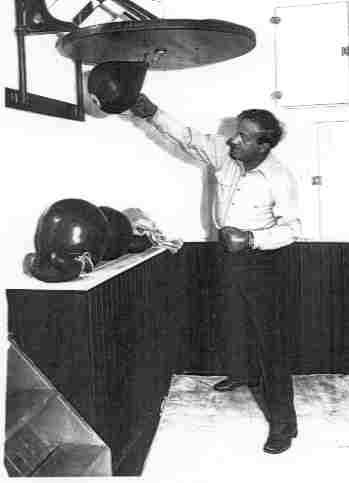
Above, Ben Hecht packs a punch in his training room at home in Nyack. Courtesy Library of Congress Prints and Photographs
July 4, 2008
As the 4th of July classical music stations revive the great American composers --- Gershwin, Bernstein, Ferde Grofe, Copeland, and, yes, Sousa, we wave the flag of American literature and recall Ben Hecht, great composer of the American short-short story, which he made accessible to ordinary American newspaper readers. Hanging onto their commuter train straps, they found on each workday something else to hang onto -- a shared immigrant experience, moments of illusion and reality, caricatures of fools and villains, street characters like those they saw on their lunch break In the 424 vignettes he wrote in Chicago almost daily, Hecht celebrated America's diversity in real people of every ethnic extraction and political stripe and, in fact, uplifted (a word he would wince at) the reading of the booboisee, his contemptuous word for the masses, borrowed from his pal H.L Mencken,
Remembered today as an iconoclast, cynic, and screenwriter of Hollywood's golden age, Hecht abhorred war in his youth and disdained excessive patriotism, having seen its horrific effect on post-war Germany in 1919 and what war did to American veterans. In the build-up to World War II, however, he changed. With Charles MacArthur he wrote the Madison Square Garden flag-waving pageant Fun to Be Free. He did considerable work on World War II propaganda, not least, Frank Capra's movie, The Negro Soldier.
Much of his rhetoric was honed for vast audiences; but here is a 4th of July glimpse into a 1956 letter he wrote to producer Sam Bronson, on the occasion of his (Hecht's) completing script work for a movie about American Revolution hero John Paul Jones. Hecht expressed certainty that the movie would be
"a trumpet call for the confused American ears ...It will bring back the lusty beginnings of American pride, the half-blinding light of humanity that shone in our fresh land.... that all men are created equal ... and entitled to life, liberty and the pursuit of happiness. . . It has the best plot, and, from Patrick Henry to Washington and Franklin, the gayest set of characters of them all."
Ben Hecht This Week Archive
June 15, 2008
The designer of the Antoinette Perry Award Tony medallions was Ben Hecht's Nyack neighbor Hermann Rosse, who was also the formidable illustrater for his 1001 Afternoons in Chicago book, published by Covici. Above, a clowning Danny Kaye and Beatice Lillie suggest their use as imposing earrings at the 1953 ceremony. Photo courtesy Libary of Congress Prints and Photographs.
May 25, 2008
Memorial Day week evokes Hecht's haunting story about the shell-shocked veteran encounted begging at the subway station.
Vox Populi by Ben Hecht
Take this man away. He annoys me. I have worked hard all day. I have troubles of my own. Unpaid bills and a sick kid. And now when I’m going home, now when I would like a few minutes rest and forgetfulness looking out of the I. C. window at the lake___ this man in his khaki overcoat: this man in front of the I.C. station I don’t like this man,. Take him away, He annoys me.MORE
What about Ben Hecht, superdelegate!
Hands down, his Chicago Hyde Park neighbor Barack Obama would have got his support early in the campaign!
May 18, 2008
Re the Tony award nominations, the play was always the thing for Ben Hecht, who brought his ear for talk heard in diverse Chicago locales into his screenwriting. The Tony award medallion was designed by his illustrator Herman Rosse (see right),a loyal friend and Nyack neighbor.Hecht and Rosse worked at stagecraft in Chicago's little theater movement starting in the 1910s.
During Tony's week we'll publish a fun vintage picture of the medals playfully displayed by two clowning celebrities. Click picture for more about Rosse.
. Library of Congress Photograph
Last week: The SS Ben Hecht and the battle for Israel.
Hecht's Israel play A Flag Is Born
May 11, 2008
Ben Hecht's mother, Sarah Swernowsky Hecht, immigrant from Kremenchung, Russia, owned and ran a women's clothing store in Racine, Wisconsin. She is seen here with her two sons, Ben, standing, and younger son Peter.
Photograph courtesy The Newberry Library, Chicago
May 4, 2008
The anniversary of the independent state of Israel evokes the role of Ben Hecht in the conflict. An oganizer with Peter Bergson of the Committee for a Jewish Army of Stateless and Palestinian Jews, which lobbied the U.S. Congress, his anti-British pronouncements resulted in a distinct career setback with the British boycott of his movies. A frigate transporting Jewish refugees from Europe to what would become Israel, the S. S. Ben Hecht, was named for him.
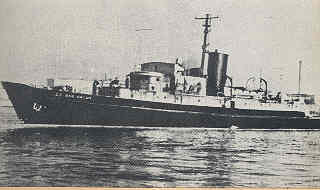
The S.S Ben Hecht, photograph courtesy The Newberry Library, Chicago.
April 29, 2008
With the purchase of the Wrigley chewing gum company by the Mars Company, we think of Hecht's Chicago Daily News story about the evocative Wrigley Building. Despite the erection of taller buildings in Chicago, it's site and illumination at the mouth of the Chicago River renders the Wrigley Building a special place for Chicago natives and visitors (see view, right). The story was "Enchanted Exiles," reprinted by the Snickernsee Press in our book, Art & Architecture on 1001 Afternoon in Chicago. It tells of the love of the building by Hecht's Dadaist friend from Berlin, George Grosz and is illustrated with a postcard of the Wrigley Building Grosz sent to Hecht.
Next week see our picture of Ben Hecht's mother, Sarah.
Ben Hecht This Week
We note that April 30, 1935 was the release date for the Ben Hecht, and Charles MacArthur movie The Scoundrel, for which they won the Oscar for original screenplay writing. The redemtion story starred Noel Coward as a character inspired by New York publisher, Horace Liverright, who was known to the writing duo. The Hecht papers are sprinkled with letters to editors, superb query letters about book projects and acrid ones disputing his receipt of royalties.
Ben Hecht This Week
April 19, 2008
The April 19, 1943 anniversary of the Warsaw Ghetto uprising of Polish Jews willing to die fighting instead of in Nazi death camps also recalls the efforts of Ben Hecht to commemorate this event in the consciousness-raising pageant he wrote, We Will Never Die, for which Kurt Weil composed the stunning musical score. The pageant played star-studded one-day performances at Madison Square Garden, the Hollywood Bowl as well as inWashington, DC, Boston, Philadelphia and Chicago. The Greek actress Katina Paxinou (For Whom the Bell Tolls) gave a thrilling performance as narrator of the Warsaw Ghetto scene.
April 15
The story an 18 year old Ben Hecht filed about the Titanic was written as the ship was sinking, a news blackout imposed by the ship's owner. Read all about how it made the front page on our Hecht Titanic page.
April 13, 2008
Ben Hecht died April 18, 1964 at his apartment home in New York Central Park West, survived by his wife Rose and a daughter from his first marriage. Just weeks before, he wrote of his pleasure that he was to be the first screenwriter subject of a Hollywood movie, Gaily, Gaily, based on a portion of his memoir of the same name.
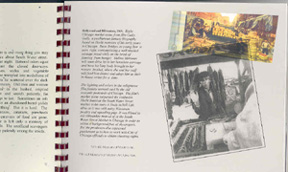
In our artist book of Hecht's Chicago art stories, we illustrate Hecht's story about the Water Street Market with a 1910 postcard view and a film still from the market scene in Gaily, Gaily with a hungry Hecht played by Beau Bridges.
April 6, 2007
On April 6 1917 the United States declared war against Germany. Ben Hecht covered the effect of that war on Germans in 1919. On returning home, he wrote a haunting, timeless story about a disabled veteran he saw at the Chicago subway stop.
March 26, 2008
Goodbye, Richard Widmark
Died today at 93, Richard Widmark, accomplished actor, perhaps best remembered today for his role in Ben Hecht's screenplay Kiss of Death where, giggling creepily, he pushed an elderly woman down the steps in her wheel-chair.
CHICAGO, APRIL 2004. BIG NEWS! Doc Films, the time honored and much lauded student-run film society at the University of Chicago, announces its spring series: "Ben Hecht: Classic Hollywood Screenwriter" April 4 - May 30. Organizer Kathy Geier says it all: "We are very excited about this series,"
And we are too! For years film revivals have omitted Hecht, celebrated him among other writers and even included him generously. However generous the shared billing, Hecht deserves his own film revival and serious consideration of his film aesthetic.
Geier reports that Doc acquired high-quality archival prints for Design for Living, Hallelujah I'm a Bum, Gunga Din, and His Girl Friday. The first two along with Underworld are little-seen in revival, on television or in video stores.
"We feel that it's especially appropriate that University of Chicago honor Hecht, given Hecht's status as a longtime resident of Chicago in general, and of our neighborhood, Hyde Park . . ." says Geier, who lives just a block from the house Ben and Marie lived in the late teens and early 1920s.
The world of Hecht fans thanks Doc for sponsoring a true all-Hecht series, for finding such rare goodies as the silent film Underworld; for which Hecht won the first writing Oscar, for Angels over Broadway and Hallelujah I'm a Bum and for bringing them back to the old neighborhood. Here Hecht developed from a Chicago Renaissance writer to an early modernist and sustained an intense feeling of spiritual home and, indeed, of loss, after he left for New York and Hollywood
VANCOUVER. June 2003. About George Fetherling's recent review of What I Saw, Reports from Berlin, by Joseph Roth, translated by Michael Hoffman (Penguin, Canada): Fetherling, who in 1977 wrote what stands out as the best of the books about Hecht, The Five Lives of Ben Hecht, sees the relationship between Roth's journalistic letters (feuillton) and the 1001 Afternoons in Chicago literary journalism Hecht began to write for the Chicago Daily News after returning from his year in Berlin 1919. The full page review appears with an image of a painting by George Grosz in the Vancouver Sun, June 14, 2003.
WASHINGTON. 2003. Correcting the stats. The number of Ben Hecht 1001 Afternoons in Chicago titles to be published in Snickersnee's new artist book, Bibliocityscape, a design driven list, is not 404 but 422.
RACINE, WISCONSIN. A HOUSE OF BEN HECHT'S
CHICAGO. Spring 2003. Walter Roth, no relation to the aforementioned Joseph, devotes a chapter to Hecht in his new book Looking Backward : True Stories from Chicago's Jewish Past (Academy Chicago Publishers). A contribution of the book is the reprinting of some of the transcript of Hecht's 1943 pageant, We Will Never Die, an extravaganza intended to arouse American Jewry and others to lobby the White House and Congress to expose the Holocaust and attempt to rescue its victims. Roth breaks the pattern of ambivalance toward and diminishing of Hecht on the part of American Jewish thinkers by embracing Hecht as a son of the Chicago literary remaissance of the 1919s and a passionate anti-Holocaust writer and activist.
KUUSANKOSKI, FINLAND. Librarian, bibliophile and book reviewer Petri Liukkonen has done nice work in chronicling Hecht and finding good quotes on his site about him and other American authors at http://www.kirjasto.sci.fi/calendar.htm/
CHICAGO. "Look you, the radio is just beginning," cried Hecht in an optimistic Chicago Daily News piece about culture and technology of the 1920s. Some 80 years later, on Sunday, August 18, Rick Kogan read from Snickersnee's new Hecht book, "Art & Architecture on 1001 Afternoons in Chicago" and talked with editor Flori Kovan on WGNradio.com/ An historic radio giant, WGN is at 720 on the AM band and can be heard in 38 of the American states when you leave the computer.
WASHINGTON. DC. Cindy Loose's article about Studs Terkel's Chicago appeared in the Washington Post (June 23). Many of the Chicago landmarks and phenomena that excite Terkel excited Ben Hecht before him. Congratulations to Loose for celebrating Chicago's landmark institutions, not least of which is the venerable Studs Terkel.
FILM FORUM of New York showed Ben Hecht's creative hand in Nothing Sacred, Monkey Business (uncredtied) Twentieth Century, Shop around the Corner (uncredited) and His Girl Friday (gender reversal based on The Front Page) in its Great American Comedy series produced by Bruce Goldstein March 29-June 6 at 209 West Houston Street.
CHICAGO. The Jazz Age Chicago site by Scott A. Newman is a gift to the on-line study of Chicago leisure between 1893-1934. Anyone who wants to get the feel of Hecht's Chicago 1910-1925 should delight in starting here. It contains many complete articles from that time span and is nicely constructed with subject access.
VICTORIA AUSTRALIA. A thorough and passionate review of Hecht's film Spectre of the Rose by Donald Phelps appears in the Australian online journal SENSES OF CINEMA, Issue 19 (March-April 2002) at sensesofcinema.com/ Hecht wrote and directed the film.
CHICAGO, The Chicago Tribune started some long overdue buzz about Ben Hecht recently when they published Robert Schmuhl's article about the challenges he faced in assessing Hecht's career when he began to examine Hecht's papers at the Newberry Library. We welcome a dialogue about Hecht. Read Mr. Schmuhl's illustrated article in the Book section of the Chicago Tribune of Sunday, March 31, 2002.
RACINE, WISCONSIN. The Racine Public Library is reviewing its holdings against Ben Hecht's booklist, "50 Books That Are Books" for a prospective exhibit: and what could be more apt? Hecht became a bibliophile in Racine and read some of these very books at that very library (at least the ones they would permit youngsters to read).
KUUSANKOSKI, FINLAND. Librarian, bibliophile and book reviewer Petri Liukkonen has done nice work in chronicling Hecht and finding good quotes on his site about American authors at http://www.kirjasto.sci.fi/calendar.htm
Selected from our Archives
July 15, 2013
Recently visiting Toronto we attended a Toronto Symphony concert featuring a piece by Ben Hecht's collaborator Franz Waxman, an immigrant from Silesia who fled to Toronto and became a distinguished composer for Hollywood films, winning Oscars for Sunset Boulevard and A Place in the Sun. I became acquainted with Waxman's work when working for the Holocaust Museum on picture research to illustrate the libretto of Ben Hecht's pageant We Will Never Dien the stage play Hecht dared to write as events in Europe were occuring and spare information about the death camps systematically killing Jews was buried in the back of the New York Times. Hecht and his initial and primary musical collaborator Kurt Weill launched the pageant at Madison Square in March 1943, beginning a sweep of major American cities intended to produce a groundswell of support for a more aggressive American campaign to save the Jews of Europe. A Washington DC performance added pleas targeted to the attending political VIPs among them Eleanor Roosevelt. Then in April came the news of the uprising of the Warsaw Ghetto, where young Jews who discerned their bleak alternatives put up a heroic fight with weapons reportedly contributed by the desperate Polish Resistance. Hecht knew Waxman's ear for drama since his European and Hollywood film music from Blue Angel to Bride of Frankenstein and Hitchcock films Rebecca and Suspicion. The two of them toiled uncredited (Hecht by preference) on Gone with the Wind and in the same year the composer directed the music for Hecht's prouder achievement Wuthering Heights. Hecht convinced Waxman to score a new scene for We Will Never Die to update the saga with current events. Music and words portraying the savage combat were incorporated seamlessly into the existing pageant one of whose basic concepts was the legacy of the fighting Jew. Following performances in Philadelpha and Chicago, and Boston, the pageant, now expanded was directed by Franz Waxman in its Hollywood Bowl performance. There were only six one or two-day venues but that is another story, well told by musicologist Bret Werb (see link below).
I sat listening at the Toronto concert to Waxman's arrangement of Bizet's Carmen themes written for the violinist character in the movie Humoresque, with the notable violinist palying, My mind however, wandered to his original, stronger stuff, his tour de force Battle of Warsaw music, which haunted me since I heard on a recording narrated at the Hollywood Bowl performance in the throaty, hissing, sometimes blood-curdling voice of Katina Patinou. She won an Oscar that year for For Whom the Bell Tolls. Dripping with spleen she speaks of Hitler's plan for the Tribinka death camp. To end the scene Waxman changed tone in his Battle Hymn of the Ghetto with lyrics by Broadway lyricist Frank Loesser: "Tears no longer, Tears no longer, let them taste the death they deal, and though we die we die in battle not beneath the tyrant's heel."
I just looked up Franz Waxman in Wikipedia because it is so widely consulted initially and purportedly open to additions. No mention of his Battle of Warsaw. Perhaps it is on Waxman's official web site which I find not navigating well as of this writing. Do the people of Toronto, where Franz Waxman is honored as a local talent know about this work as a remarkable stand-alone piece to be preserved and performed? Do the historians of film music or military music of World War II know it exists? For a thorough coverage of how Ben Hecht, Kurt Weill and Franz Waxman collaborated in the face of Holocaust denial or disinterest in the United States, read Bret Werb's We Will Never Die: A Pageant to Save the Jews of Europehttp://orelfoundation.org/index.php/journal/journalArticle
Florice Whyte Kovan
** Patinou won an Oscar that year for For Whomthe Bell Tolls
Selected from our Archives
July 15, 2013
Recently visiting Toronto we attended a Toronto Symphony concert featuring a piece by Ben Hecht's collaborator Franz Waxman, an immigrant from Silesia who fled to Toronto and became a distinguished composer for Hollywood films, winning Oscars for Sunset Boulevard and A Place in the Sun. I became acquainted with Waxman's work when working for the Holocaust Museum on picture research to illustrate the libretto of Ben Hecht's pageant We Will Never Dien the stage play Hecht dared to write as events in Europe were occuring and spare information about the death camps systematically killing Jews was buried in the back of the New York Times. Hecht and his initial and primary musical collaborator Kurt Weill launched the pageant at Madison Square in March 1943, beginning a sweep of major American cities intended to produce a groundswell of support for a more aggressive American campaign to save the Jews of Europe. A Washington DC performance added pleas targeted to the attending political VIPs among them Eleanor Roosevelt. Then in April came the news of the uprising of the Warsaw Ghetto, where young Jews who discerned their bleak alternatives put up a heroic fight with weapons reportedly contributed by the desperate Polish Resistance. Hecht knew Waxman's ear for drama since his European and Hollywood film music from Blue Angel to Bride of Frankenstein and Hitchcock films Rebecca and Suspicion. The two of them toiled uncredited (Hecht by preference) on Gone with the Wind and in the same year the composer directed the music for Hecht's prouder achievement Wuthering Heights. Hecht convinced Waxman to score a new scene for We Will Never Die to update the saga with current events. Music and words portraying the savage combat were incorporated seamlessly into the existing pageant one of whose basic concepts was the legacy of the fighting Jew. Following performances in Philadelpha and Chicago, and Boston, the pageant, now expanded was directed by Franz Waxman in its Hollywood Bowl performance. There were only six one or two-day venues but that is another story, well told by musicologist Bret Werb (see link below).
I sat listening at the Toronto concert to Waxman's arrangement of Bizet's Carmen themes written for the violinist character in the movie Humoresque, with the notable violinist palying, My mind however, wandered to his original, stronger stuff, his tour de force Battle of Warsaw music, which haunted me since I heard on a recording narrated at the Hollywood Bowl performance in the throaty, hissing, sometimes blood-curdling voice of Katina Patinou. She won an Oscar that year for For Whom the Bell Tolls. Dripping with spleen she speaks of Hitler's plan for the Tribinka death camp. To end the scene Waxman changed tone in his Battle Hymn of the Ghetto with lyrics by Broadway lyricist Frank Loesser: "Tears no longer, Tears no longer, let them taste the death they deal, and though we die we die in battle not beneath the tyrant's heel."
I just looked up Franz Waxman in Wikipedia because it is so widely consulted initially and purportedly open to additions. No mention of his Battle of Warsaw. Perhaps it is on Waxman's official web site which I find not navigating well as of this writing. Do the people of Toronto, where Franz Waxman is honored as a local talent know about this work as a remarkable stand-alone piece to be preserved and performed? Do the historians of film music or military music of World War II know it exists? For a thorough coverage of how Ben Hecht, Kurt Weill and Franz Waxman collaborated in the face of Holocaust denial or disinterest in the United States, read Bret Werb's We Will Never Die: A Pageant to Save the Jews of Europehttp://orelfoundation.org/index.php/journal/journalArticle
Florice Whyte Kovan
** Patinou won an Oscar that year for For Whomthe Bell Tolls
****
April 30, 2018 A reporterly technique of young Ben Hecht was to approach people in the streets and parks of Chicago and say, “Excuse me, may I ask you a question? I am a newspaper reporter and I was just wondering why you are . . .” and then he would reference whatever they were doing that might provide him a daily story. If he were that young reporter today, he would be at the construction site at Brooks Park in Greenwood where workers are preparing the site for the memorial to the late Gwendolyn Brooks, Pulitzer Poetry winner, Poet Laureate of the United State and inductee to the Chicago Literary Hall of Fame. Margot Mahon is the sculptor of the child-friendly installation Gwendolyn Brooks: The Oracle of Bronzeville, which includes her circular porch where children may sit with an affble likeness of their poet role model.
Today as I write this, according to Mahon's day-to-day notes and plan, the porch is to be built over cement footings poured last Thursday and Friday. Hecht would have been pleased to tell the human interest story behind the project in the words of the various workers, from the designer, the cement pourers, the carpenters, the bronze caster, the landscapers and, certainly, the cinematographer who is documenting phases of the installation. He would understand the profound honor of a writer of world acclaim being memorialized in her beloved Chicago.
Dedication of the memorial will be June 7, the 101st birthday of the renowned poet, whose statue will be the first of a woman poet in a Chicago public park. The project is sponsored by the Chicago Literary Hall of Fame, the Poetry Foundation and the Chicago Parks District. Hecht was inducted into the Chicago Literary Hall of Fame in 2013, Gwendolyn Brooks, in 2010.
Links: Chicago Literary Hall of Fame
Poet Laureate of the United States
Sculptor: Margot McMahon
BEN HECHT IN CHICAGO LITERARY HALL OF FAME
Ben Hecht was inducted in the Chicago Literary Hall of Fame on December 7, 2013. As he is without descendents to receive the award, Hecht's statue was received by David Spadafora, Librarian and President of the Newberry Library, home of the Hecht Collection. I was pleased to have had something to do with this,thanks to the Hall of Fame's request to me for input. Now the award statue will join Hecht's Oscar for the silent film Underworld among the artifacts in his collection, under the care of Martha Briggs, Lloyd Lewis Curator of Midwestern Manuscripts. Ben Hecht and his 1001 Afternoons in Chicago series was honored at the Cliff Dwellers club on November 15. Hecht mentioned "cliff dwellers" in a subtitle for his Oscar-winning Underworld, likely referring both to the elite literary organization of which he was not a member and the local term at the time for inhabitants of the skyscrapers of Chicago, where the vertical city was pioneered.
The events co-partnered by Roosevelt Univiersity on Michigan Boulevard aptly provided space in buildings familiar to Hecht, not only in his workday as a journalist devising metaphors for the skyline on a park bench across the street, but in his off-hours as a budding playwright in Chicago's pioneering little theater with Kenneth Sawyer Goodman.
The other inductees this year were L. Frank Baum, Edna Ferber, Leon Forrest, John H. Johnson and Thornton Wilder.
431 Fifth Street NE
Washington, DC 20002
fax: 202 547 0132
snickers